Digital Twins and the data unification challenge in a Smart Da Nang


Aiming for the digital economy to account for roughly 40% of GRDP and ranking among the world's top 50 smart cities by 2030, urban Digital Twin technology is viewed by many experts as a pivotal foundation for Da Nang to realize these ambitions.
Abundant data, limited interconnection
Over the past decade, Da Nang has consistently ranked among Vietnam's leading localities in IT application and digital transformation, developing numerous digital platforms serving citizens and businesses.
Da Nang has invested comprehensively in IT infrastructure, data centers, telecommunications networks, and information security, viewed as crucial "digital assets" for building a smart city.
According to Mr. Ho Quang Buu, Vice Chairman of the City People's Committee, Da Nang is focusing on key tasks such as building an urban Digital Twin, a data exchange platform, promoting AI applications, developing low-altitude airspace economics, establishing a Smart Free Trade Zone, an International Financial Center, and various new development models.
According to experts, the main current challenge is not a lack of data, but rather that data remains scattered across disparate systems. Each sector has built its own platform, but inter-system communication, sharing, and aggregated exploitation remain limited.
Mr. Jacky Lee, Director of the APJ AI Innovation Hub at Dell Technologies, suggested building a unified urban intelligence platform that integrates data, AI, IoT, and an Intelligent Operations Center (IOC). Da Nang needs a unified platform where data from cameras, sensors, traffic systems, public services, and specialized platforms can be connected, standardized, and securely managed, helping leaders make faster and more accurate decisions.
According to Dell Technologies representatives, alongside tech solutions, establishing an open architecture following international standards will prevent vendor lock-in, ensuring integration capabilities and sustainable growth for the smart city.
Experiences in building data- and AI-driven smart cities
Mr. Nguyen Danh Thanh, Director of the Viettel Solutions Digital Urban Center, noted that urban digital twins are a core technology that can effectively support urban planning, simulation, and management in the upcoming period. Here, data continuously updates from real-world systems, enabling management agencies to track, analyze, simulate, and forecast scenarios prior to making decisions.
Global cities like Singapore, Paris (France), and Shenzhen (China) have deployed this model to simulate infrastructure, analyze traffic, predict scenarios, and assist policy planning to improve urban management efficiency.
The current overarching trend is shifting from isolated data management to cross-sector data connectivity and integration for urban simulation, forecasting, and governance.
Meanwhile, Huawei shared smart city development insights from Shenzhen (China), named World Smart City at the 2024 World Smart City Expo in Barcelona, Spain.
One highlighted technology deployed was the urban digital twin, which allows the simulation of entire city infrastructure in digital space by connecting data from AI cameras, IoT sensors, and management systems. Three decisive success factors included: unified leadership from government, establishing data and AI as the foundation, and synchronized investment in digital infrastructure like cameras, transmission networks, and sensor systems.
Recommendations from experts
Based on international experience, experts believe Da Nang fully meets the conditions required to deploy urban digital twin technology. However, the critical point is not investing in technology first and finding application problems later, but starting from the city's practical needs.
Mr. Nguyen Danh Thanh emphasized that the city should select core focus problems to pilot before expanding to other sectors. Additionally, data must be standardized according to a unified data architecture, evaluated with specific performance metrics, and rolled out on an appropriate roadmap.
From a global technology enterprise perspective, Huawei recommended that Da Nang prioritize digital twins, AI, IoT, smart cameras, and operational systems to enhance urban governance efficiency, ensure security, manage infrastructure, monitor flooding, and support real-time data-driven decision-making.
Meanwhile, Ms. Aarthi Kannalagan, Smart City Solutions Architect for Asia-Pacific at Dell Technologies, suggested that combining technologies like Digital Twins, AI video analytics, intelligent transport systems, and flood monitoring/forecasting solutions will help Da Nang boost urban governance capacity, increase resilience against challenges, and improve public service quality.
Experts agree that urban digital twins and AI can act as a "digital brain," enhancing city governance, optimizing resources, and moving closer to the goal of becoming a leading global smart city by 2030.


No comments on this News yet!
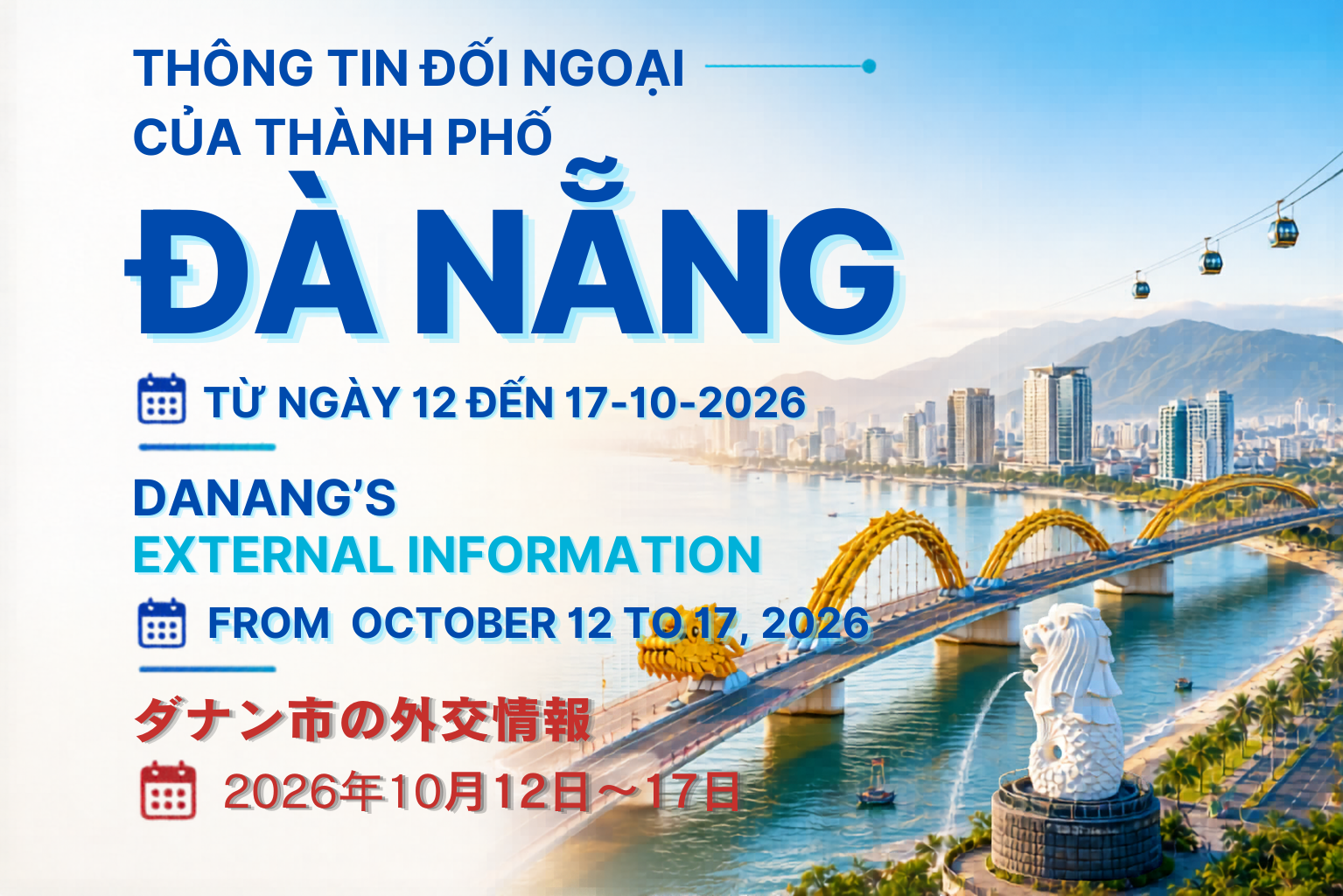
External information on the economy, politics, culture, and society in Danang city from Oct 12 to 17
From October 12 to 17, various notable economic, political, cultural and societal events and activities took place in Danang city. These highlights were compiled by Danang Portal.
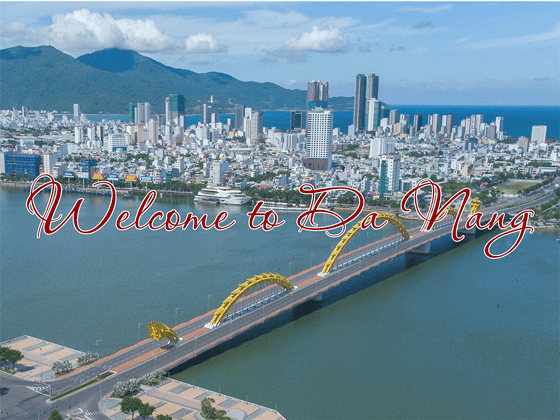
Da Nang targets smart city status by 2030
In addition to driving digital transformation, Da Nang is transitioning to a data-driven governance model. With orientations to build an AI City alongside projects on semiconductor microchips, AI, and Digital Twins, Da Nang is progressively forming a smart management platform that uses data as the foundation for governance and operations.
Developing the Vietnam International Financial Center in Da Nang based on AI, Data, and human resources
At the discussion panel "Developing the Vietnam International Financial Center in Da Nang" during the High-Level Policy Dialogue Conference Da Nang 2026 on July 7, city leaders and international experts shared visions for building the Vietnam International Financial Center in Da Nang (VIFC-DN) along modern lines, using AI, data, and skilled workforce as foundations, with a focus on green financial products, digital assets, and tokenization to build international competitiveness.
Enhancing Digital Capacity for Civil Servants, and Public Employees
Training and fostering digital human resources is one of the key tasks aimed at effectively implementing Resolution No. 57-NQ/TW of the Politburo. In Da Nang, many communes and wards have proactively enhanced digital transformation skills, data management, and data exploitation for cadres, civil servants, and public employees, contributing to building a modern, professional, and citizen-centered administration.
Hoa Cuong: The journey to digital government
Driven by early concerns when implementing a two-tier local government system, leaders in Hoa Cuong Ward resolved to apply digital technology to leadership, management, and service to citizens and businesses. That ambition became reality after a journey of over eight months navigating challenges and obstacles.
Ngu Hanh Son Ward Innovation and Digital Transformation Space officially opens
On July 4, the Ngu Hanh Son Ward People's Committee held a launch and opening ceremony for its Innovation and Digital Transformation Space.
Building a smart city to improve quality of life
From e-government foundations to smart cities, Da Nang is step-by-step realizing sustainable development goals centered on a philosophy of citizens as the focal point, technology as the driving force, and data as the foundation for all decision-making.
Hoa Cuong Ward announces operation of digital government system
On June 24, the Hoa Cuong Ward People's Committee announced the operational deployment of its "Digital Government System".
Approval of the Pilot Scheme for Da Nang City Digital Twin
Da Nang will launch a pilot Digital Twin model to create an integrated digital data environment, visualizing spatial and specialized data to support data-driven management, governance, monitoring, and decision-making.