Building a smart city to improve quality of life


From e-government foundations to smart cities, Da Nang is step-by-step realizing sustainable development goals centered on a philosophy of citizens as the focal point, technology as the driving force, and data as the foundation for all decision-making.
Laying the foundation from long-term vision
A smart city represents a journey to create a modern, safe, convenient, and sustainable living environment where every milestone of digital transformation aims to elevate quality of life, especially in this era of national advancement.
In Da Nang, that journey began in 2010 with the E-Government Architecture. By 2014, the city launched its E-Government Information System, establishing a vital foundation for digital transformation.
Building on that base, in 2018, Da Nang issued its Smart City Architecture and rolled out the Smart City Project through 2025 (oriented to 2030) featuring 6 key pillars, 16 priority areas, and 53 major projects and programs.
According to Mr. Tran Chi Cuong, Vice Chairman of the City People's Committee, Da Nang's success stems from identifying smart city development as a central, long-term task positioned within the city's overall development strategy.
At the workshop "Promoting Green Transformation Towards an Eco-Friendly and Smart City," Vice Chairman Tran Nam Hung affirmed that Da Nang selected a growth model grounded in green growth, with people at the center, the environment as the baseline, and technology as the driver. This is both a modern development requirement and the pathway to long-term sustainable growth.
From this orientation, the city has persistently invested in digital infrastructure under the motto "infrastructure leads the way." Three centralized IT parks recognized by the Prime Minister,
alongside large-scale projects in AI, semiconductor microchips, and innovation, are shaping a new tech ecosystem, setting the stage for the digital economy and smart city growth.
Parallel to infrastructure, Da Nang views data as the "core asset" of a smart city. Shared data systems, domain data, spatial urban GIS data, and over 1,500 open data sets have been built and connected via a data-sharing platform. This supports management and operations while allowing businesses and citizens to utilize and develop new services.
Technology serving public life
The distinguishing factor in Da Nang's smart city model lies not in the number of applications or investment scale, but in its underlying philosophy: technology must effectively serve human life.
On shared digital foundations, numerous smart services have been deployed across traffic, environment, education, healthcare, food safety, and online public services.
A standout highlight is the Intelligent Operations Center (IOC), regarded as the city's "digital brain." Featuring city-level, domain-specific, and commune/ward-level IOCs, the system provides dozens of real-time monitoring and data analysis service groups, enabling leaders to make rapid, accurate, and efficient decisions.
Beyond driving socio-economic management, the IOC monitors the implementation of Resolution No. 57-NQ/TW targets, handles disaster management, tracks flooding, provides heavy rainfall warnings, and coordinates rescue operations—protecting lives and assets amidst increasingly complex climate change dynamics.
Achieved results have carved out a prominent footprint for Da Nang on domestic and international smart city maps. The city earned the Vietnam Smart City Award for six consecutive years, won the ASOCIO Smart City Award in 2019, and received the Seoul Smart City Prize in 2023 in the "Human-Centricity" category.
Notably, at the Vietnam Smart City Awards 2025, Da Nang continued to win major accolades in smart governance, green environment, and innovative startup ecosystem, standing out as the top-performing locality in smart city building. Nearly 164,000 public votes nationwide for the title of "Livable City" reflect strong social consensus on the path the city has chosen.
Looking ahead, Da Nang is drafting its Digital Transformation and Smart City Scheme for 2026–2030 (oriented to 2035) and piloting "digital twin" tasks assigned by the Prime Minister to create a digital space where citizens, businesses, and investors can experience and connect with the city from anywhere.
Under Plan No. 60/KH-UBND dated February 12, 2026, issued by the City People's Committee regarding tasks to target "Top 50 global reputable smart city rankings" by 2030, Da Nang aims to rank among the world's 50 exemplary smart cities by 2030.
This journey is measured not by the sheer count of digital platforms or advanced technologies, but by the practical values delivered to the community. Driven by long-term vision, administrative determination, and active participation from citizens and businesses, Da Nang is step-by-step cementing its human-centered smart city model aimed at sustainable development and enhanced quality of life for all.


No comments on this News yet!
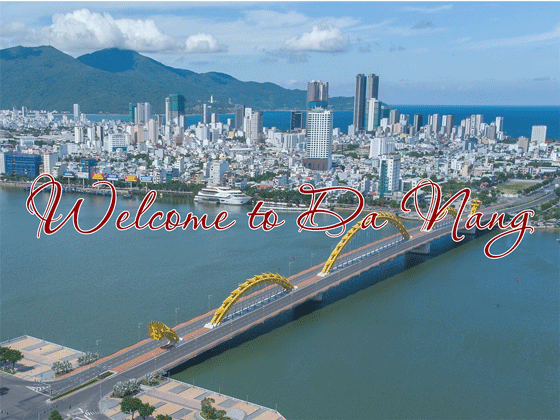
Da Nang targets smart city status by 2030
In addition to driving digital transformation, Da Nang is transitioning to a data-driven governance model. With orientations to build an AI City alongside projects on semiconductor microchips, AI, and Digital Twins, Da Nang is progressively forming a smart management platform that uses data as the foundation for governance and operations.
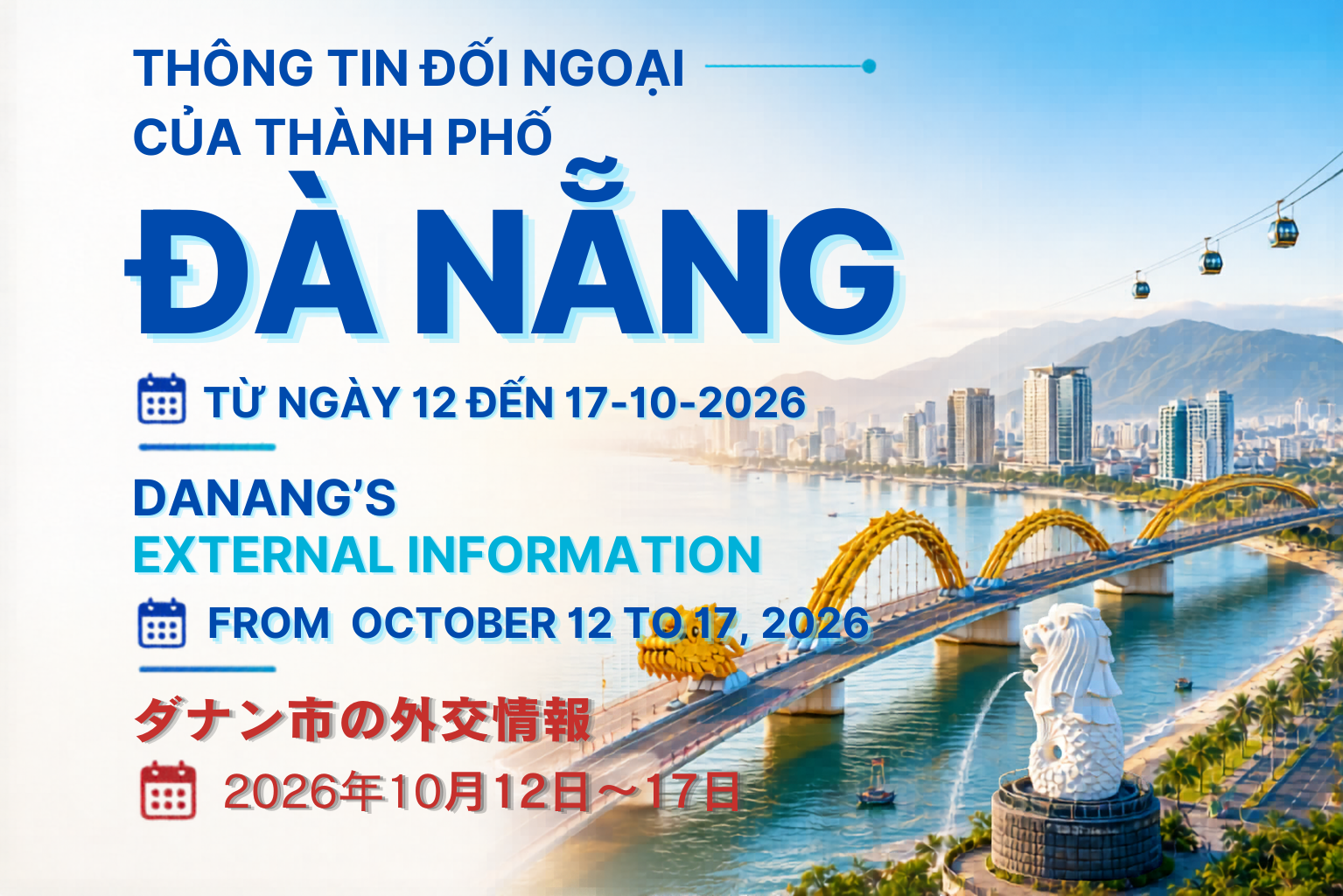
External information on the economy, politics, culture, and society in Danang city from Oct 12 to 17
From October 12 to 17, various notable economic, political, cultural and societal events and activities took place in Danang city. These highlights were compiled by Danang Portal.
Approval of the Pilot Scheme for Da Nang City Digital Twin
Da Nang will launch a pilot Digital Twin model to create an integrated digital data environment, visualizing spatial and specialized data to support data-driven management, governance, monitoring, and decision-making.
Digital Twins and the data unification challenge in a Smart Da Nang
Aiming for the digital economy to account for roughly 40% of GRDP and ranking among the world's top 50 smart cities by 2030, urban Digital Twin technology is viewed by many experts as a pivotal foundation for Da Nang to realize these ambitions.
Ngu Hanh Son Ward Innovation and Digital Transformation Space officially opens
On July 4, the Ngu Hanh Son Ward People's Committee held a launch and opening ceremony for its Innovation and Digital Transformation Space.
Developing the Vietnam International Financial Center in Da Nang based on AI, Data, and human resources
At the discussion panel "Developing the Vietnam International Financial Center in Da Nang" during the High-Level Policy Dialogue Conference Da Nang 2026 on July 7, city leaders and international experts shared visions for building the Vietnam International Financial Center in Da Nang (VIFC-DN) along modern lines, using AI, data, and skilled workforce as foundations, with a focus on green financial products, digital assets, and tokenization to build international competitiveness.
Enhancing Digital Capacity for Civil Servants, and Public Employees
Training and fostering digital human resources is one of the key tasks aimed at effectively implementing Resolution No. 57-NQ/TW of the Politburo. In Da Nang, many communes and wards have proactively enhanced digital transformation skills, data management, and data exploitation for cadres, civil servants, and public employees, contributing to building a modern, professional, and citizen-centered administration.
Hoa Cuong: The journey to digital government
Driven by early concerns when implementing a two-tier local government system, leaders in Hoa Cuong Ward resolved to apply digital technology to leadership, management, and service to citizens and businesses. That ambition became reality after a journey of over eight months navigating challenges and obstacles.
Hoa Cuong Ward announces operation of digital government system
On June 24, the Hoa Cuong Ward People's Committee announced the operational deployment of its "Digital Government System".